★★★★★
Daniela VerifiedNever seen my cat so obsessed with a treat

Cat health


By Patrick H.Verified
Felinologist at FHN
Updated October 23, 2026
What if everything you've done for your cat's bladder was aimed at the wrong thing?
Research found the root cause of most cat bladder trouble. And that root cause is probably being triggered in your house every single day.
Here are the 5 things the research found.

More than 50% of cats with bladder problems test negative for stones and infection. In 2011, Dr. Tony Buffington at Ohio State gave this a name: Pandora Syndrome.
The research points to one big trigger: stress. The bladder is just where it shows.

A friend comes over. A new pet. The vacuum turns on. Even a new couch.
To us, that's a normal day. To a cat, each one is a threat. And day after day, it takes a heavy toll.
So think back. Does your cat panic when you leave? Pee outside the box? Lick bald spots? Hide when guests come? Act a little strange lately?
If you said yes to even one, that can be stress showing up. And stress is only the first step. Here's the second.

You fill the water bowl every morning. At night, it looks like nobody touched it.
That's not your cat being stubborn. Cats are built to get their water from food, not a bowl. So they barely feel thirsty.
Less water in means thick, strong pee. Those small, extra smelly clumps in the litter box? That's what it looks like.
Now picture that strong pee sitting on a bladder coating that stress may have already worn thin. It stings, like lemon juice on a paper cut.
That's the flare up.

The special food works on the pee. The fountain adds water. The meds go after the pain and infection. But which one helps your cat with the real trigger: stress?
And that's not on you. Stress hurts cats the way it hurts us, in body and mind. Yet nobody connects those everyday moments to the bladder.

Cats are wired to hide pain. In the wild, looking weak made them a target. So by the time you see straining, it may have been building for a while. That's why it feels like it came out of nowhere.
So how do you get ahead of something you can't see coming?
The answer
Here's how bladder care has changed.
ReactiveWait for the emergency. You found out when it was already bad. Straining at 2 a.m. A catheter. A night at the vet.
Still reactiveFix the pee. After the scare came the special food and the fountain. They help. But they start after the trouble, and they skip the stress.
ProactiveStart with stress. Stress is where it starts. So you don't wait for a sign. You protect against all three risks every day: stress, a worn bladder coating and thick pee.
A 3.0 routine needs three things, every day:
And your cat needs to want it. If they fight it, it won't happen every day.

It starts where the trouble starts: stress. Each pack has L-Theanine (50 mg), the same daily amount used in a cat study. Then it covers the rest. NAG and D-Mannose (150 mg each) for the bladder coating. FOS (100 mg) for the gut. Taurine (150 mg). All inside 84% water.
And it comes the way cats are built to take in water, in something they lick like food. No pills. No hiding it in dinner.
9 out of 10cats lick it on the first try.
Every night the pack tears, and they come running. Ten seconds and it's done.
And you stop walking in the door afraid of what you'll find.
Keep the special food and your vet's plan. HydraFlow goes right alongside them. And if your cat won't take it, you're covered for 90 days.


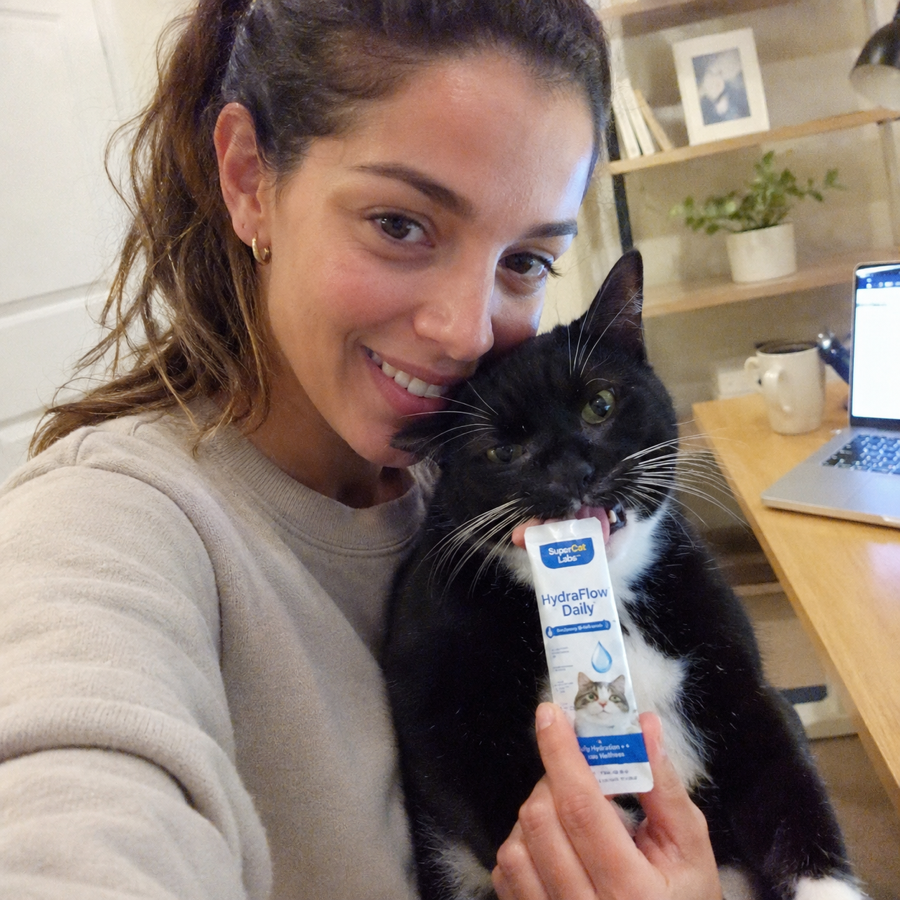
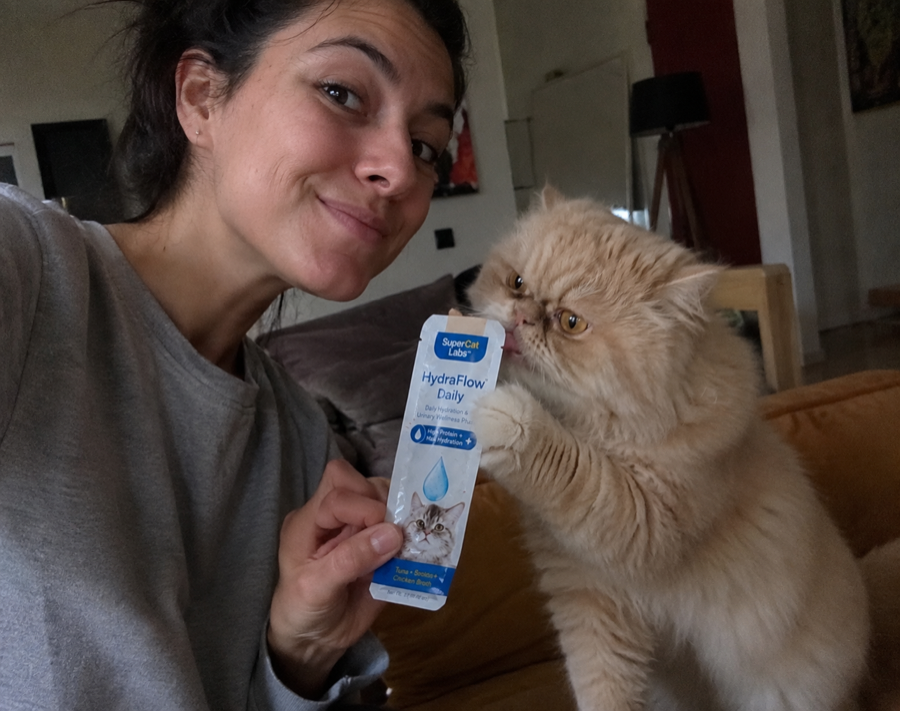
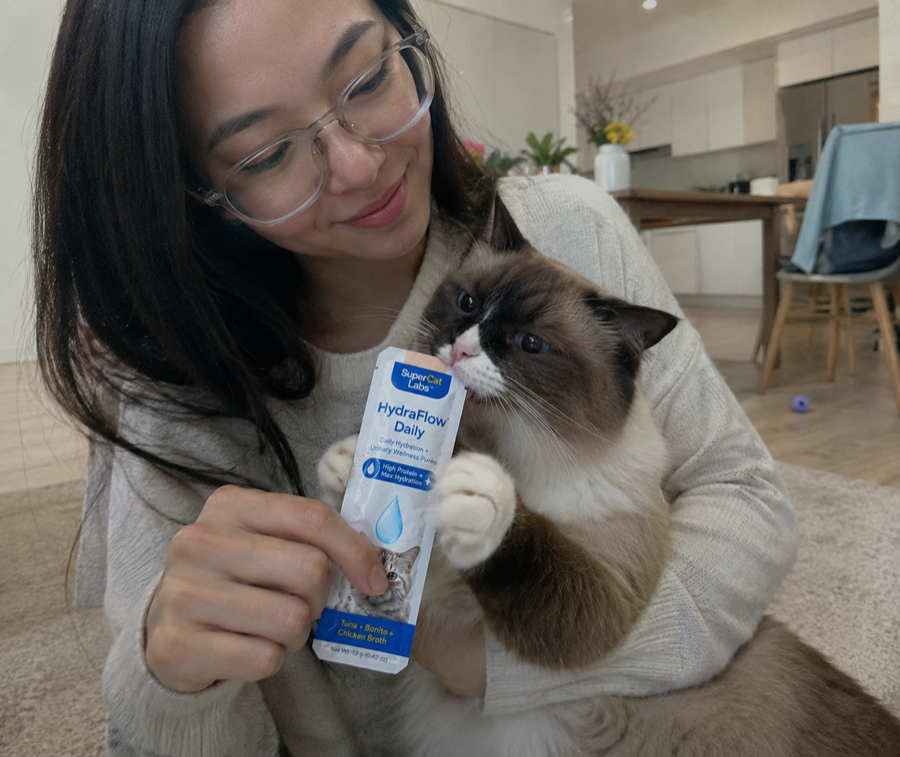
Photos from real cat parents in our creator community.

"it does what it says and my two cats are obsessed with this"
Sources: Buffington, J Vet Intern Med, 2011 (Pandora Syndrome). Westropp et al., Am J Vet Res, 2006 (stress and the bladder in cats). Dramard et al., Irish Vet J, 2018 (L-Theanine, 50 mg a day in cats).
HydraFlow Daily is a supplement, not a medicine. These statements have not been evaluated by the FDA. It is not meant to diagnose, treat, cure or prevent any disease. If your cat is straining with little or no pee, see a vet right away.
Verified cat-parent reviews
4.7 579 reviews

★★★★★
Daniela VerifiedNever seen my cat so obsessed with a treat
★★★★★
Cassie S VerifiedOMGGG my cat goes crazy for this!!
★★★★★
Kara V VerifiedGhost really likes this treat